


A smart home multi-sensor for MyQ
Project Description
During the winter of 2025 I was an Industrial Design co-op on a team tasked with developing an innovative smart-home device. We designed an innovative smart-home device and presented it to an audience of 200 employees, receiving positive feedback.
Timeline
15 weeks, 01.2025-05.2025

My role - Global Innovation Group
The global innovation group at Chamberlain was comprised of six interns across engineering, communication and design fields. Alongside one other industrial design partner I lead all product related activities during this program. This included conducting research to understand consumer needs, executing design direction from ideation, through CAD development and into prototyping and finally presenting to an audience of 200+ employees, receiving positive feedback.

How can we design a better door and window sensor?

The Thompson family
-Primary user group-
Young, busy households are among the most concerned for their home security. They are looking for a reliable way to monitor the home both when they're home and away.

Emery
-Secondary user group-
Emery lives alone but travels frequently leaving his dog at home with caretakers. He needs a simple peace-of-mind solution to know that there's no one in his home when he wouldn't expect.


Competitive Analysis
We started by analyzing competitive products to find design opportunities. We ranked how the competition treated button placement, installation and setup workflows, battery replacement and feature sets to effectively design a better sensor.
Single Sensor

Multi-function
Smart home
Security systems
Design a smart home multi-sensor that still alerts users of their home security.

Market opportunity

MyQ Visual Brand Language

Debossed logos

Gloss accents

Rounded rectangles

Variable chamfers


2) The second round revolved around surface treatment to the front face with the goal of creating a comfortable touchpoint when installing the sensor.
1) The first round of form studies focused on implementation of the rule of thirds, allowing the main body to comprise two thirds of the unified form.


Device Set up
An integral part of this product is the MyQ app, which guides the user through the set up process and serves as a central hub for the device to send notifications to.

Access point monitoring
The core feature of the AIOS is monitoring the status of a home's access point. Rather than alerting the user every time there's been activity, this sensor notifies its users whenever it detects anomalies, such as if a door has been left open for over a minute, thus reducing notification fatigue.

Presence sensing
The AIOS also has a built in presence sensor which alerts users if presence is detected when they're away from home.

Smoke alarm detection
The AIOS is also listening for the frequency of fire alarms meaning it can alert users if there is a fire when they're away.

Space constraints
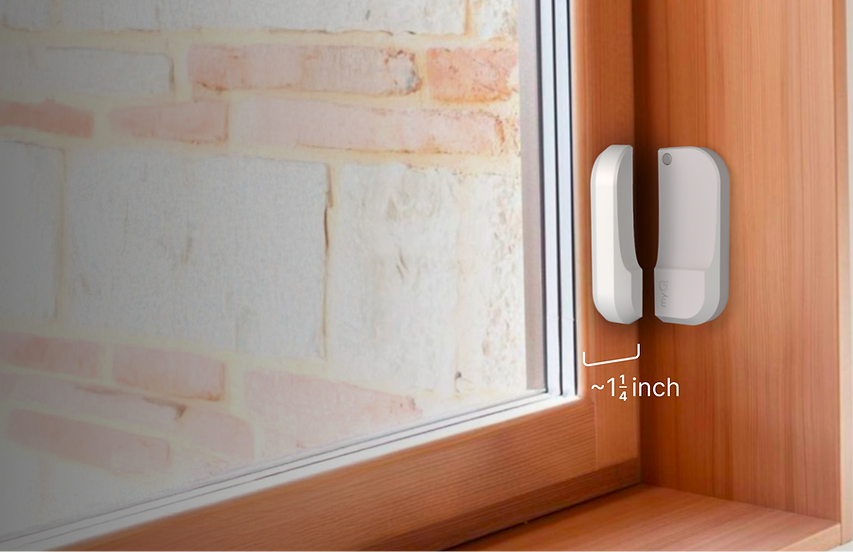
This device was also designed to be used on windows. However, the standard window trim in the U.S. is 1.25 inches, meaning we had to design around this parameter.

Presence sensor
Microphone
Battery
Hall effect Sensor
Magnet

The sensor is powered by a 3.2V coin cell battery that will need replaced every ~18-24 months. We designed a simple snap fit mechanism to allow the backplate to stay attached during replacement, maintaining the original adhesive.
Battery replacement mechanism
Additional use cases

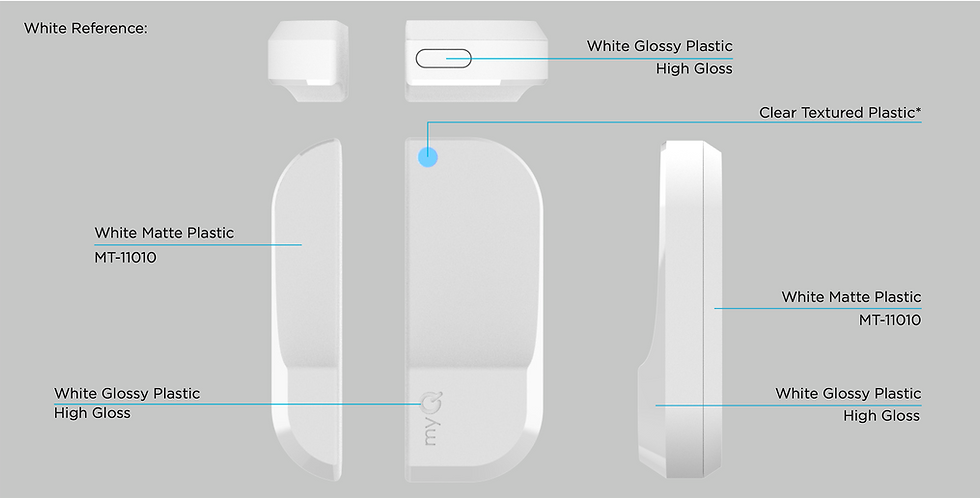
Request for manufacturing
We sent our design to a regional manufacturer to have a physical prototype made.

Point of Purchase
The AIOS fits seamlessly into the MyQ family of products. We are proposing selling it as a standalone product or one to compliment a MyQ security bundle.

